How to Stop Beard Itch: Real Causes, Proven Fixes, and What to Expect
Beard itch driving you crazy? Learn why it happens, when it stops, and the exact products and habits that make the growth phase a lot more tolerable. No fluff — just what works.
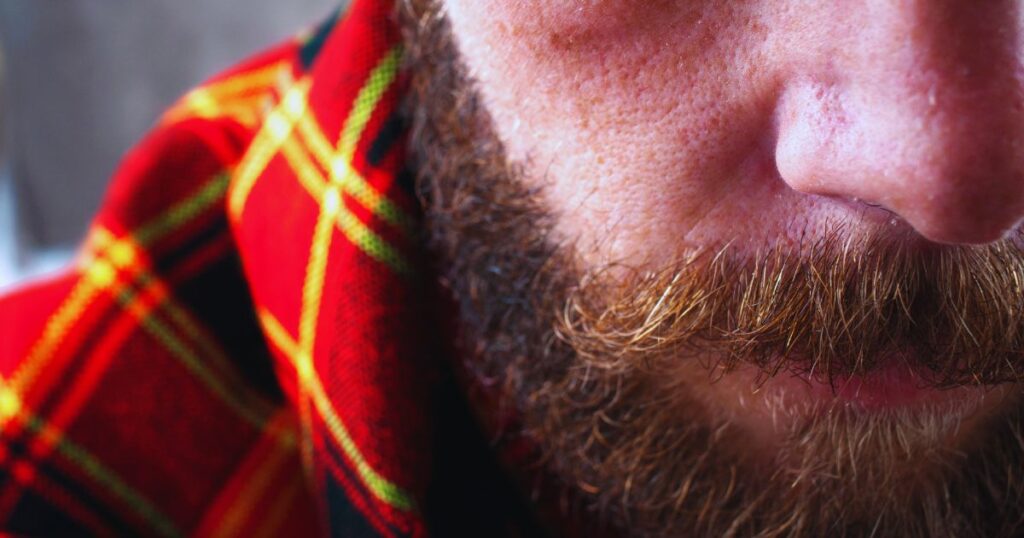
Beard itch is the number one reason men shave off a beard they actually wanted to grow. The timing is almost always the same — somewhere around week two or three, the discomfort gets bad enough that the razor starts looking like a reasonable option.
Here’s the thing: the itch is normal, it’s temporary, and it’s almost always fixable with the right approach. Understanding why it happens makes it a lot easier to deal with — and a lot less likely to send you back to square one.
This guide covers the real causes of beard itch, what actually works to relieve it, and what you should avoid doing during the growth phase if you want to push through to the other side.
→ If you’re also figuring out the rest of your grooming routine, the complete Men’s Grooming Guide covers skincare, hair care, and tools alongside beard care — worth bookmarking.
Why Beard Itch Happens — The Real Explanation
Most guys assume the itch is coming from the beard itself — the hairs rubbing against the skin. That’s part of it, but it’s not the main cause. The real problem is almost always the skin underneath.
When you shave, the razor cuts each hair at a sharp, blunt angle. As those hairs grow back, the angled tips poke into the surrounding skin, causing irritation. At the same time, the skin under a developing beard tends to dry out faster than usual because natural oils get trapped in the growing hair instead of reaching the surface.
The result is a combination of physical irritation from the hair tips and dry, flaky skin that’s starved of moisture. Both problems peak around weeks two through four — which is why that window feels so bad.
In practice: The itch is not a sign that your skin is reacting badly to your beard or that you have sensitive skin. It’s a predictable mechanical and hydration problem that almost every man goes through during the early growth phase.
There’s a secondary factor that fewer people talk about: product buildup. If you’re using a regular body wash or shampoo to clean your beard, the residue left behind on the skin contributes to dryness and irritation. More on that below.
When Does Beard Itch Stop? Honest Timeline
For most men, the worst of the itch fades somewhere between weeks four and six. The reason is straightforward: once the hairs are long enough to lie flat instead of pointing outward, they stop poking into the skin. At the same time, if you’ve been moisturizing consistently, the skin underneath starts to adapt.
It doesn’t disappear overnight. It tapers off gradually — you’ll notice it’s less intense by week three, more manageable by week four, and largely gone by week six if you’ve been taking care of the skin.
Worth knowing: Men who skip beard oil or any moisturizing step often report that the itch lasts much longer — sometimes past week eight. The beard itself grows the same either way, but the skin condition makes a significant difference in how long the uncomfortable phase lasts.
→ If you’re tracking your progress week by week, the full beard growth guide breaks down exactly what to expect at each stage — itch included.
What Actually Fixes Beard Itch — Step by Step
There’s no single product that eliminates itch on its own. It’s a combination of habits that address both the dryness and the physical irritation. These are the ones that make a measurable difference:
Step 1 — Switch to a Beard-Specific Wash
Regular shampoo and body soap are formulated to remove more oil than your facial skin can afford to lose. Using them on your beard strips the natural sebum that keeps the skin underneath hydrated.
A beard wash — or at minimum, a gentle sulfate-free face wash — cleans the beard without over-drying the skin. Use it two to three times a week during the growth phase, not every day.
→ There’s more to this than just the label. Beard Wash vs. Regular Shampoo — What You Need to Know explains the actual formulation differences and what to look for on the ingredient list.
🛒 Ready to make the switch? → See top-rated beard washes on Amazon
Step 2 — Apply Beard Oil Daily
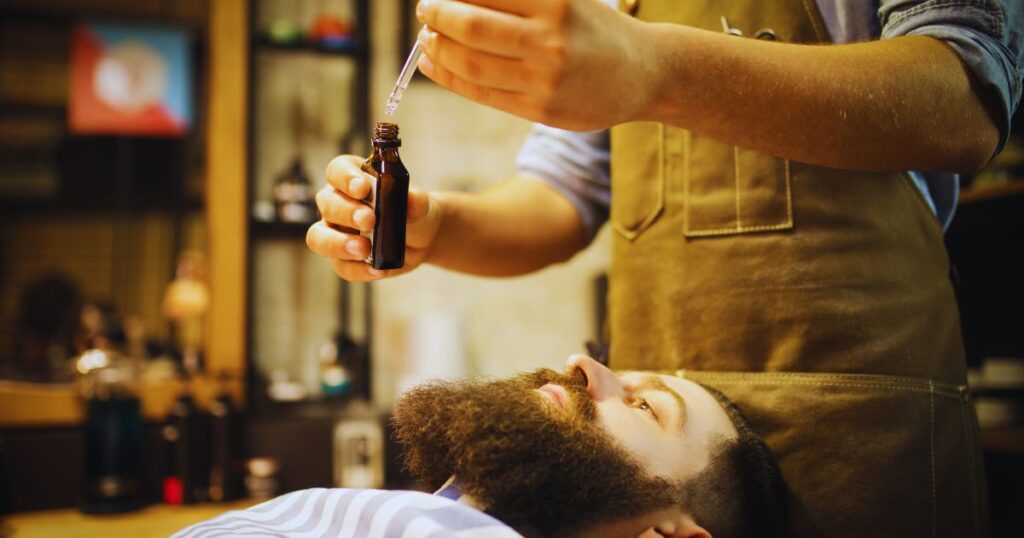
Beard oil is the single most effective product for relieving beard itch. Applied correctly, it hydrates the skin underneath — which is where the problem is — and softens the hairs so they’re less likely to irritate the surface.
The key detail most people miss: you’re applying it to the skin, not just the hair. Warm three to four drops between your palms after a shower, then work it in from the skin outward. Don’t just run it over the surface of the beard.
Oils with jojoba, argan, or sweet almond as the base absorb well and closely mimic the skin’s natural sebum. Avoid anything with a heavy fragrance load if your skin is already irritated — it can make things worse.
🛒 Find the right formula for your skin type. → Browse highly-rated beard oils on Amazon
→ Once your beard gets a bit longer, you may start wondering whether balm makes more sense. Beard Oil vs. Beard Balm — Which One Do You Actually Need? covers that question in full.
Step 3 — Use a Boar Bristle Beard Brush
A natural bristle beard brush does two things that matter for itch relief: it physically exfoliates the skin under the beard, loosening dead skin cells that contribute to flaking and irritation, and it distributes beard oil far more evenly than your hands can.
Use it once a day after applying your oil. Start from the skin and work outward in the direction of hair growth. This also helps train the hairs to lie flatter, which reduces the poking sensation against the skin.
Plastic brushes don’t do this effectively. The bristle flexibility of boar hair or quality synthetic alternatives is what makes the difference.
🛒 A good brush speeds up the relief timeline noticeably. → See top-rated boar bristle beard brushes on Amazon
Step 4 — Moisturize the Skin at the Edges
The area where your beard meets bare skin — the cheeks, the neckline, around the mustache — tends to dry out faster than the center of the beard because it gets less oil coverage. Applying a lightweight facial moisturizer to those transition zones reduces dryness and cuts down on the overall itch.
Use the same moisturizer you’d use on the rest of your face. You don’t need anything special here — consistency matters more than the specific product.
→ If you haven’t settled on a daily moisturizer yet, Best Men’s Moisturizers with SPF — Reviewed for 2025 has a solid breakdown of options at different price points.
Step 5 — Resist Scratching
This one sounds obvious, but it matters more than most people expect. Scratching provides a few seconds of relief but damages the skin underneath, disrupts the hair follicles, and makes the dryness significantly worse. It turns a manageable itch into a prolonged one.
When the urge hits, use the brush instead. The physical sensation is similar, it relieves the itch for longer, and it actually helps rather than creating more irritation.
Things That Make Beard Itch Worse — Common Mistakes
Some of the most common habits during early beard growth actively extend the itch phase without people realizing it.
- Washing with hot water. Hot water strips more oil from the skin than cool or lukewarm water. Shower with warm water and try to rinse your beard with slightly cooler water at the end.
- Over-washing the beard. Daily washing — especially with harsh products — keeps the skin in a constant state of dryness. Two to three times a week is more than enough for most people.
- Using alcohol-based products near the beard. Aftershaves and many toners contain alcohol that dries out the skin at the beard line. Switch to alcohol-free formulas or apply them away from the beard area.
- Applying oil to a dry beard. Beard oil absorbs best into damp skin. Applying it right after a shower — before your skin fully dries — significantly improves how much actually reaches the skin versus sitting on the surface.
- Using too much product. More beard oil doesn’t mean more relief. Too much creates a greasy surface layer that can clog pores and attract grime. Three to five drops is the right amount for most beard lengths.
- Wearing rough fabrics against the beard. Heavy wool scarves and stiff jacket collars create constant friction against the beard that extends irritation. During the worst weeks, softer fabrics make a noticeable difference.
The least obvious one: Stress and poor sleep genuinely affect skin condition and moisture retention. Men going through a high-stress period often report that the itch phase lasts longer. It’s not psychosomatic — stress hormones measurably impact the skin barrier.
Products That Actually Help With Beard Itch
There are a lot of products marketed specifically at beard itch — most of them are just beard oils with extra branding. What matters is the formula, not the label. Here’s what to look for:
Beard Oil — What to Look For
- Base oils: jojoba, argan, sweet almond, grapeseed. These absorb cleanly without leaving residue.
- Avoid: heavy coconut oil as the primary base — it works for some skin types but clogs pores for others, especially during active growth.
- Fragrance: unscented or essential oil-scented options are better for irritated skin than synthetic fragrance blends.
- Price: a solid beard oil doesn’t need to be expensive. Many well-formulated options land in the $10 to $18 range on Amazon.
Beard Balm — When to Add It
Balm adds a layer of shea butter and beeswax that provides slightly longer-lasting moisture than oil alone. It’s more useful once the beard is long enough to need some shape, but it can also add an extra hydration layer during the itch phase if oil alone isn’t doing enough.
Gentle Exfoliants
A soft facial scrub or a silicone cleansing brush used once or twice a week loosens the dead skin cells building up under the beard. This step alone relieves a significant portion of the itch for men who have naturally dry skin. Don’t overdo it — more than twice a week increases irritation rather than reducing it.
Managing Beard Itch: Realistic Expectations
What You Can Realistically Control
- The intensity of the itch — significantly reduced with daily beard oil and proper cleansing
- The duration of the itch phase — can be shortened by two to three weeks with consistent care
- Skin flaking and dandruff under the beard — largely preventable with regular moisturizing and light exfoliation
- The urge to scratch — manageable with a brush as a substitute
What You Can’t Fully Control
- The fact that the itch phase exists — it’s a physiological process, not a product problem
- Individual skin sensitivity — some men have a more pronounced itch phase regardless of what products they use
- The exact timing — week four for some, week six for others
The honest version: you can make the itch phase significantly more tolerable and shorter, but you can’t completely skip it. Anyone selling a product that claims to eliminate beard itch entirely is overstating things.
When Beard Itch Might Be Something Else
In the large majority of cases, beard itch is exactly what this guide describes: a temporary skin and hydration issue. But there are situations where it might indicate something else worth addressing.
Folliculitis
If the itch is accompanied by small red bumps or pustules around the hair follicles, you may be dealing with folliculitis — a bacterial or fungal infection of the follicles. It’s more common in men who shave the neckline frequently or who have ingrown hairs. A dermatologist can confirm this and prescribe a topical treatment if needed.
Seborrheic Dermatitis
If the itching comes with significant flaking — white or yellowish flakes in the beard — it may be seborrheic dermatitis rather than simple dry skin. This is a chronic skin condition that responds well to antifungal shampoos (like Nizoral) used as a beard wash. It tends to recur and is best managed under dermatological guidance.
Contact Dermatitis
If the itch started suddenly after introducing a new product, it may be a contact reaction to an ingredient. Fragrance and certain preservatives are the most common culprits. Try eliminating new products one at a time to identify the trigger, and switch to fragrance-free formulas.
General rule: If the itch is severe, covers an unusual area, or doesn’t improve at all after six weeks of consistent care, it’s worth seeing a dermatologist. Most grooming advice — including this article — applies to normal physiological beard itch, not medical skin conditions.
Quick Summary — How to Stop Beard Itch
- Beard itch is caused by dry skin and sharp hair tips poking the skin — not by the beard itself.
- It peaks between weeks two and four and fades for most men by week five or six.
- Daily beard oil applied to damp skin is the most effective single fix.
- Switch to a beard-specific wash — regular shampoo makes dryness and itch significantly worse.
- A boar bristle brush exfoliates the skin and distributes oil better than hands alone.
- Don’t scratch — use the brush as a substitute for lasting relief.
- Avoid hot water, over-washing, and alcohol-based products near the beard line.
- Persistent or unusual itch may indicate folliculitis, seborrheic dermatitis, or contact dermatitis — see a dermatologist.
What Comes Next in Your Grooming Routine
Getting the itch under control is usually the turning point — the moment the beard stops being a project and starts being part of the routine. Once you’re past it, the next questions tend to be about maintenance, products, and keeping the whole thing looking intentional.
→ If you haven’t read it yet, the Complete Men’s Grooming Routine Guide is worth going through at this stage — it covers everything from skincare to hair care in a way that complements what you’ve built with the beard.
A few questions that come up most often after the itch phase:
→ Should you be using oil, balm, or both by now? The answer depends on your beard length — Beard Oil vs. Beard Balm — Which One Do You Actually Need? walks through it clearly.
→ Thinking about trimming or shaping for the first time? How to Grow and Maintain a Beard: Step-by-Step Guide covers the right timing and technique for first-time trimming.
→ Ready to pick a proper trimmer? Best Electric Trimmers for Men — Tested and Ranked compares the most popular options on the US market.
Final Thoughts
Beard itch is uncomfortable, but it’s not a reason to give up on a beard you actually want. It’s one of the most predictable and manageable parts of the growth process — if you know what’s causing it and what to do about it.
The core routine is simple: beard-specific wash, daily oil applied to the skin, a natural bristle brush, and patience through weeks three and four. That combination shortens the hard phase and makes the daily experience tolerable enough to push through.
Most men who make it to week six are glad they didn’t shave in week three. That’s not an exaggeration — the window between ‘this itches constantly’ and ‘I actually like this beard’ is usually less than two weeks.
FAQ — Beard Itch
1. Is beard itch normal or does it mean something is wrong with my skin?
Beard itch in the first four to six weeks of growth is completely normal. It’s a mechanical and hydration issue caused by blunt hair tips and drying skin — not a sign of a skin problem. If the itch is severe, comes with visible irritation, or doesn’t improve after six weeks of consistent care, it’s worth seeing a dermatologist. → [Is Beard Itch Normal? When to Worry and When to Just Wait]
2. How long does beard itch last?
For most men, the peak itch fades between weeks four and six. With daily beard oil and proper cleansing, many men notice significant improvement by week three. Without any moisturizing care, the itch can persist well past week eight. → [How Long Does Beard Itch Last? Real Timeline by Week]
3. Does beard oil actually stop the itch or is it just marketing?
Beard oil works when applied correctly — directly to the skin, not just the surface of the beard. The mechanism is simple: it replaces the sebum that the growing beard absorbs before it can reach the skin surface. Oils with jojoba or argan as the primary base are the most effective and best tolerated by facial skin. → [Does Beard Oil Really Work? What It Does (and Doesn’t Do)]
4. What’s the fastest way to relieve beard itch right now?
The fastest relief comes from washing with cool water and a gentle cleanser (not hot water or shampoo), immediately followed by applying beard oil to damp skin, then brushing through with a boar bristle brush. That combination — wash, oil, brush — delivers noticeable relief within a day or two of consistent use. There’s no instant fix, but that’s the fastest working routine. → [Fastest Beard Itch Relief — What Actually Works in 24 Hours]
5. Can beard dandruff and beard itch be related?
Yes — they’re often the same root problem. Flaking (beardruff) and itch usually come from the same source: dry, undernourished skin under the beard. In some cases, persistent flaking indicates seborrheic dermatitis, which needs antifungal treatment rather than just moisture. Regular exfoliation and consistent beard oil use address both in most cases. → [Beard Dandruff — Causes, Fixes, and When It’s Something More]
6. Should I shave and start over if the itch is unbearable?
In most cases, no — and not just because of preference. Shaving resets the hair tips back to sharp, blunt angles, which means the itch cycle starts again from the beginning the next time you grow. Pushing through with proper care is almost always faster than shaving and restarting. The exception is if a medical condition is involved, in which case treatment comes first. → [Should You Shave Off Your Beard? Honest Advice on When to Push Through]
7. Are there any ingredients I should avoid in beard products if I have itchy skin?
Yes. Synthetic fragrances are the most common irritant — look for unscented or essential oil-scented formulas instead. High concentrations of menthol and eucalyptus can also sting already-irritated skin. Alcohol as a primary ingredient in any product applied near the beard area dries the skin significantly. Coconut oil works well for some people but clogs pores for others with oily or acne-prone skin. → [Beard Product Ingredients to Avoid If You Have Sensitive Skin]
Affiliate Disclosure: This article contains Amazon Associates affiliate links. Purchases made through these links may earn us a small commission at no additional cost to you. All recommendations reflect independent research and practical evaluation — no brand has paid for placement in this article.
1 thought on “How to Stop Beard Itch: Real Causes, Proven Fixes, and What to Expect”